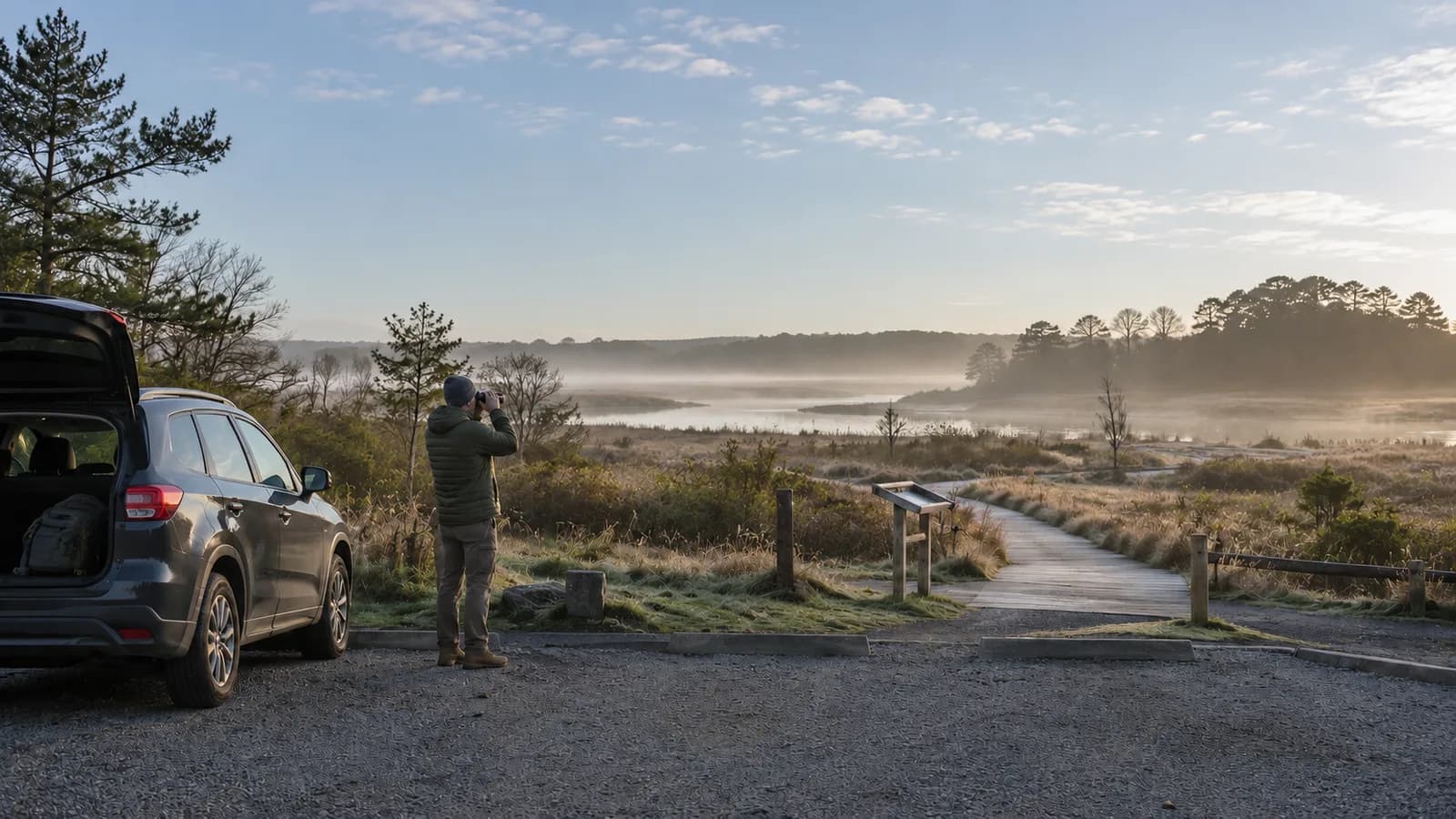
Every account follows them: no chase behavior, no invented precision, and no sensitive-species coordinates beyond what authoritative sources publish.
Welfare First, Photos Second
If the animal is altering its behavior because of you, you are too close.
The subject's wellbeing takes priority over every photograph. Watch for stress signals — head lifts, tail flicks, alert postures, abandoned feeding, agitated young. Back off the moment you see them. A missed shot is always recoverable; a flushed nest, a stranded calf, or a panicked run into a road is not. The best wildlife photographers are the ones most willing to lower the camera.
Respect Minimum Approach Distances
Know the published minimums for the species and habitat you're shooting, and add margin.
National parks, wildlife refuges, and marine protected areas publish species-specific approach distances for good reason. 25 yards for most large mammals, 100 yards for predators, 100 yards for marine mammals under the Marine Mammal Protection Act, 200+ meters for nesting raptors during breeding. Treat these as hard minimums, not goals. A longer lens is always the right answer.
Respect the Habitat
Don't bait, call excessively, manipulate vegetation, or trample sensitive ground.
The habitat is the subject as much as the animal is. Don't use food or recorded calls to pull animals out of cover — it disrupts feeding rhythms, stresses territorial species, and in some jurisdictions is illegal. Don't break branches or move vegetation for a cleaner frame. Stay on durable surfaces and established paths. Cryptogamic soil, riparian edges, and alpine meadows take decades to recover from a single footprint.
Know the Season
Breeding, nesting, denning, and migration windows multiply disturbance risk.
An animal that tolerates your presence in October may abandon a nest in May. Learn the local breeding calendar before you visit. During nesting season, stay further back than published minimums and never circle a nest to get both sides. During rut and denning, give extra berth to predators and ungulates. Migration stopovers are effectively refueling stations — disturbing a flock costs them calories they cannot spare.
Leave No Trace
Pack out everything you pack in. Leave the site as you found it.
All trash, including food scraps and biodegradables like apple cores, leaves. Human food wrappers teach wildlife to associate people with calories, which ends badly for both sides. Don't move rocks, collect feathers or shells, or rearrange anything for a composition. If you build a blind, dismantle it completely before you leave. The next photographer — and the animals — should find the site exactly as you did.
Follow Laws and Permits
Protected areas, endangered species, and commercial use all have rules. Know them.
In US national parks, a shoot of eight people or fewer with hand-carried gear in areas open to the public usually needs no permit, commercial or not (EXPLORE Act, 2025). Bigger crews, sets, models or closed areas may need one, and a paid photo workshop may need a commercial use authorization. Wildlife refuges and state parks set their own rules. The Endangered Species Act bans harassing listed animals. Drones can't take off or land in US national parks, and most wildlife refuges ban them too. Check the rules for each place before you shoot. Source: NPS filming and still photography page, checked October 2026.
Honest Documentation
Never pass a staged, captive, or baited shot off as a wild encounter.
Game-farm captives, baited raptors, and staged set pieces have their place as studio work — but they must be labeled as such. Passing a captive shot off as wild devalues every photographer doing the actual work and misleads audiences about the animal's real behavior. Be explicit in captions. The integrity of the genre depends on it.
Respect Other Photographers and Visitors
The spot isn't yours. Share angles, share intel, share silence.
A productive location draws a crowd. Keep voices down, don't crowd someone's line of sight, and never break a stalk in progress. If you discover a nest, den, roost, or individual animal, do not post its precise coordinates publicly. Pressure from geotagged sharing has documented impacts on species at well-known locations.